

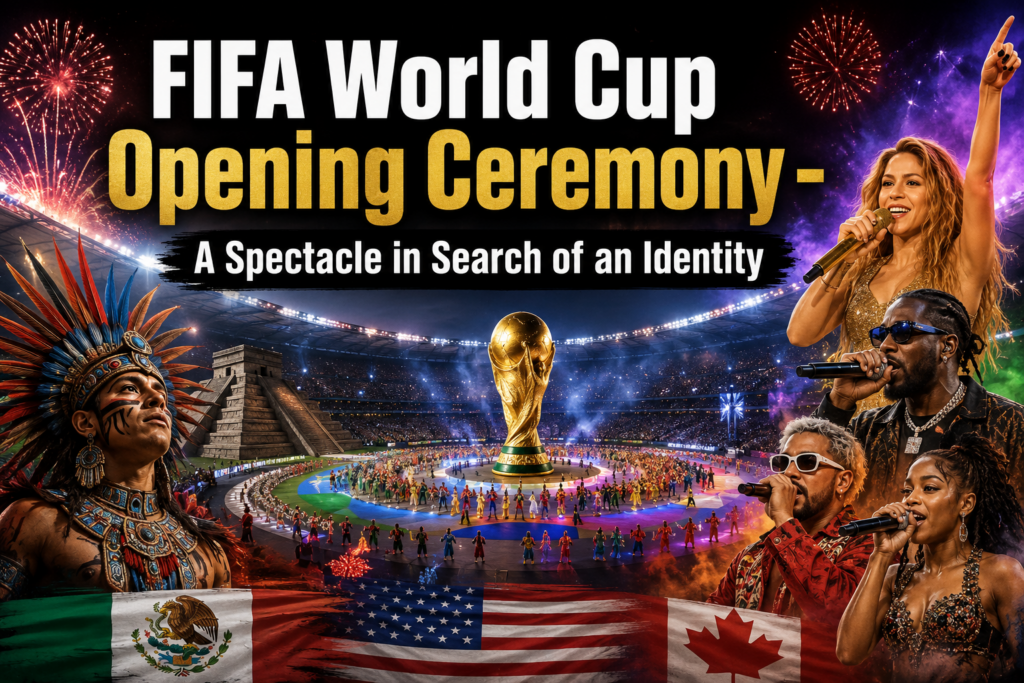
For a month every four years, the FIFA World Cup opening ceremony is the world’s briefest, loudest, and most expensive handshake. It’s a fifteen-to-thirty-minute supernova of choreography, pyrotechnics, and celebrity cameos, designed to bridge the gap between the pre-game analysis and the actual kickoff. But does it ever truly score?
The short answer: It depends on what you’re here for.
The Pageantry: An Undeniable “Wow” Factor
From a purely logistical standpoint, the modern ceremony is a marvel. The 2022 edition in Qatar, held at the stunning Al Bayt Stadium, was a masterclass in scale. The centerpiece was a giant, projected “shoelace” of light weaving through the crowd, a poetic metaphor for connection. The integration of a hyper-realistic, animated mascot (La’eeb) into the live show was technically flawless. Moments like this are pure spectacle—the kind of eye candy that justifies the 4K broadcast.
Similarly, the 2014 ceremony in Brazil captured the nation’s ginga with a dazzling display of percussion, capoeira, and an appearance by a paraplegic individual using a robotic exoskeleton to kick a ball. It was a moment of genuine innovation and emotion.
The Curious Case of Celebrity Integration
This is where the ceremony often stumbles into “cheese” territory. The tradition of a pre-match pop concert peaked (or bottomed out) with 2010’s Shakira and Freshlyground’s “Waka Waka (This Time for Africa),” an infectious anthem that remains the gold standard. Since then, the rotation has been a mixed bag.
2022 gave us BTS member Jung Kook, who performed a catchy new original, “Dreamers,” alongside Qatari singer Fahad Al Kubaisi. It was energetic and broadcast-friendly, but the choreography felt sterile, more like a music show award stage than a raw, communal celebration. Conversely, the 2018 ceremony in Moscow featured Robbie Williams, who committed the cardinal sin of ‘live event’ performance: he gave the middle finger to the camera. While shocking, it was at least memorable—something the polished, focus-grouped performances of today often lack.
The Cultural Conundrum: Authenticity vs. Brand Safety
The core tension of the World Cup ceremony is its identity crisis. Is it a showcase for the host nation or a global ad for FIFA’s sponsors (Coca-Cola, Adidas, and Hyundai)?
When it gets it right, like 2006’s “The Return of the Legends” in Berlin (where past winners like Pelé and Beckenbauer walked out), it feels like a living museum. When it gets it wrong, it feels like a corporate retreat variety show. The 2022 ceremony, while visually stunning, was criticized for glossing over Qatar’s rich cultural heritage in favor of a generic, futuristic aesthetic. The powerful sounds of ardah (traditional sword dancing) were present, but they were buried under a symphony of Hollywood-style orchestral swells.
The Verdict: Pre-Game or Main Event?
The World Cup opening ceremony is not “must-see TV” for the traditional football purist, who is likely still in the pub finishing a pint. For the neutral family viewer, it is a perfect, low-stakes, high-glitz appetizer.
Rating: ★★★☆☆ (3/5)
Pros:
- Technically breathtaking production values (lighting, projection mapping, fireworks).
- Occasional moments of genuine cultural beauty or athletic innovation.
- The palpable, nervous energy of the crowd before the final whistle.
Cons:
- Often lacks soul; feels more like a dress rehearsal than a street party.
- Lip-synced pop stars and awkward green-screen effects ruin immersion.
- Too short to develop a theme, too long to ignore before the match starts.
Final thought: You won’t remember the choreography five minutes after kickoff, but you’ll never forget the blast of the confetti cannon. And maybe, for a celebration of the world’s game, that fleeting burst of joy is enough.

Author: Opinions509
People can ask you to keep your mouth shut, but does that not keep you from having your own opinion.
Author
Stay connected for new publications, events, and more.
More Stories
Spain Ends France’s Dream to Reach the 2026 FIFA World Cup Final
Argentina: 3 – Egypt: 2 – The Champions Survive, The Pharaohs Fall with Honor
Norway Shocks Brazil: Haaland Sends the Seleção Home